
Beloit, WI · Garage Door Service
What Happens During a Garage Door Service Call in Beloit
A straight look at what a garage door service call covers in Beloit, WI - spring checks, track alignment, and cold-weather opener issues on older homes.
- Repairs & new doors
- Springs & openers
- Serving 4 nearby communities
The Problem
Most of the housing stock in and around Beloit went up between 1942 and 1977, with the median landing around 1961. That means a huge share of the doors we open a truck for were installed, or replaced with like-for-like parts, decades ago. The original torsion hardware on a lot of these garages is side-mounted, the kind of setup that was common on homes built through the 1960s and '70s and isn't what gets stocked on most trucks today.
A service call usually starts with a homeowner describing one symptom - the door won't open, it's making a grinding noise, it slams the last foot of travel - but the actual job is figuring out which of several aging parts caused it. On a house from this era, a broken spring rarely travels alone. The cable, the rollers, and the track brackets have usually been working just as hard, just as long, and a call that only replaces the part that failed often gets a callback within a year. We check the whole run, not just the symptom.
This is also why we don't quote a flat price over the phone before we see the door. A 1961 track mount and a 1978 one aren't interchangeable, and guessing wrong wastes your time and ours.
What Local Conditions Do
Beloit sits in a climate band classified as cold and severe, and that shows up in the hardware before it shows up anywhere else in the house. Steel contracts in sub-zero stretches, which tightens tolerances on rollers and track that were already worn from 60 years of cycles. Grease that moved fine in September turns to paste in January, and a door that was merely loud in fall can bind completely once the cold sets in.
Moisture matters too. An unheated garage that swings from damp to freezing and back puts rust on cable ends and spring coils faster than a climate-controlled space would. On the service call, that means we're looking at corrosion points a mild-climate tech might skip - cable anchor brackets, the bottom of torsion springs, hinge pins on steel panels.
We don't recommend insulating or heating a garage as a fix for this; that's a renovation decision, not a repair one. What we do on a service call is check whether the existing hardware has reached the point where cold-weather failure is a matter of when, not if, and tell you honestly which it is.
What Changes With the Season
Spring counts matter more here than in a milder climate. A torsion spring is rated for a number of open-close cycles, and cold steel is more brittle steel - a spring that's lasted twelve winters in a severe-cold area has done harder work per cycle than the same spring somewhere temperate. That's part of why spring failure calls cluster in the first real cold snap of the year, right when the door gets used more and lubricant has already thickened.
Opener force settings drift with temperature too. A limit or force setting that was fine in August can make the opener strain against a stiffer door in January, which shortens gear life on top of everything else. On a winter service call we check and reset those settings as a matter of course, not an upsell.
In summer, the complaint shifts - swollen wood panels on older doors, sagging weatherstripping, openers that run hot and trip their own safety cutoff on the hottest days. Across the roughly 8,235 households in this area, we see both ends of that cycle on repeat, which is part of why a single visit rarely nails everything down without asking what time of year the problem actually started.
What to Check
Before you call, a few things are worth a homeowner's own eyes first. Look at the springs above the door - if one is visibly stretched apart or sitting crooked compared to the other, that's a two-spring job even if only one broke. Check the cables at the bottom corners for fraying or rust, especially if the garage isn't heated. Pull the emergency release and see if the door moves smoothly by hand; if it's heavy or binds partway, the track or rollers need attention before the opener takes more strain.
Listen for the sound change, too. A door that's gone from a smooth roll to a grinding or popping noise is usually telling you rollers are worn or a track bracket has loosened, both common on houses from the 1960s and '70s where the track mounting has had decades to work its way loose from the framing.
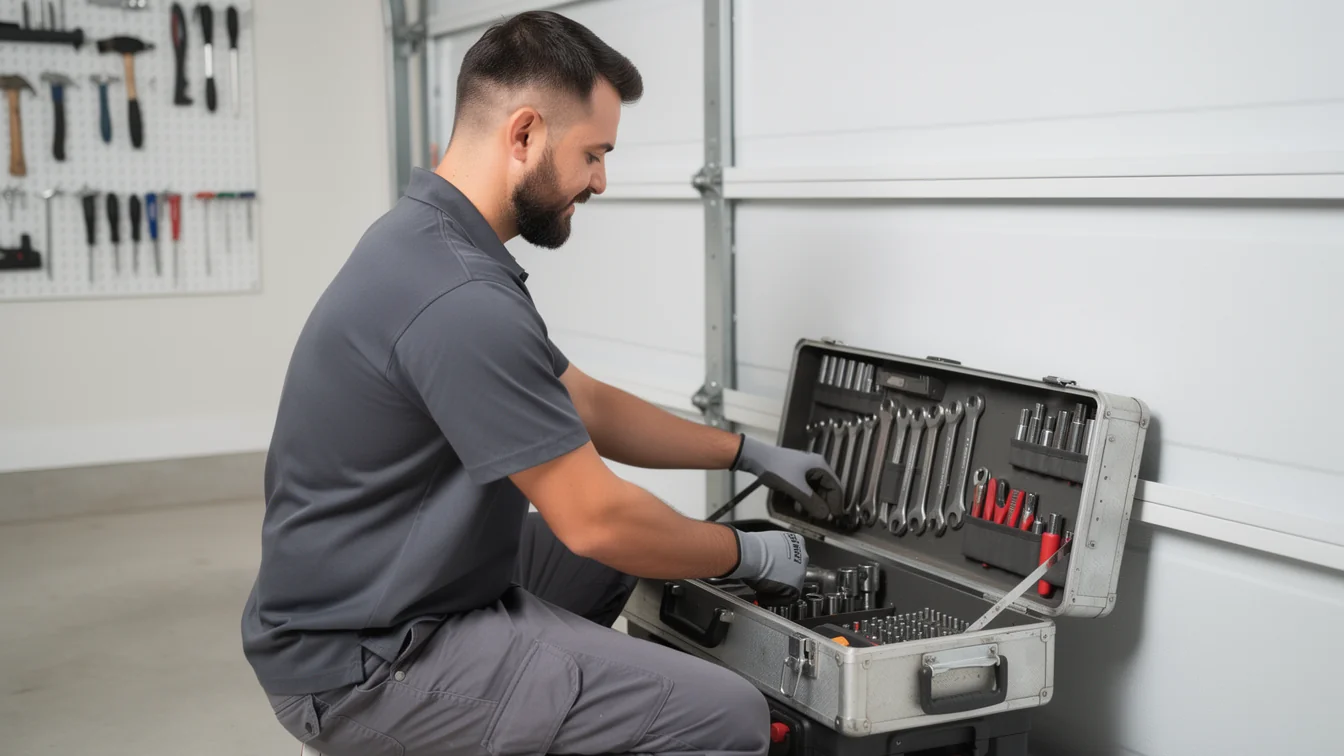
What we check on the actual call: spring tension and wear, cable condition, roller and hinge wear, track alignment, opener force and limit settings, and weatherstripping condition given how hard cold air works its way in here. We don't do full door replacements as a line item on a standard service call - if the door itself is the problem, that's a separate conversation, not an add-on.
Frequently asked questions
How do I know if it's a spring problem or an opener problem?
If the opener motor runs but the door barely moves or doesn't lift, suspect the spring - the opener isn't built to lift a door's full weight on its own. If the opener doesn't respond at all, or trips and reverses, that's more likely the opener itself or its force settings, which we check and adjust on most service calls.
Why does my garage door act up more in winter here?
Beloit's winters are classified as severe cold, and steel hardware contracts and binds in sub-zero temperatures while old lubricant thickens. Combined with torsion springs that have already logged years of cycles on a house from the 1960s or '70s, cold snaps are when worn parts tend to fail.
Do you service areas outside Beloit itself?
Yes - we cover the surrounding area including Clinton, La Prairie, Newark, Plymouth, Avon, Orfordville, Sharon, Darien, Spring Valley, Milton, and Brodhead, all within about 8 to 19 miles of Beloit.
Related garage door services in Beloit
More garage door guides
Book garage door service in Beloit
Call now or request a quote - tell us what the door is doing and where you are.